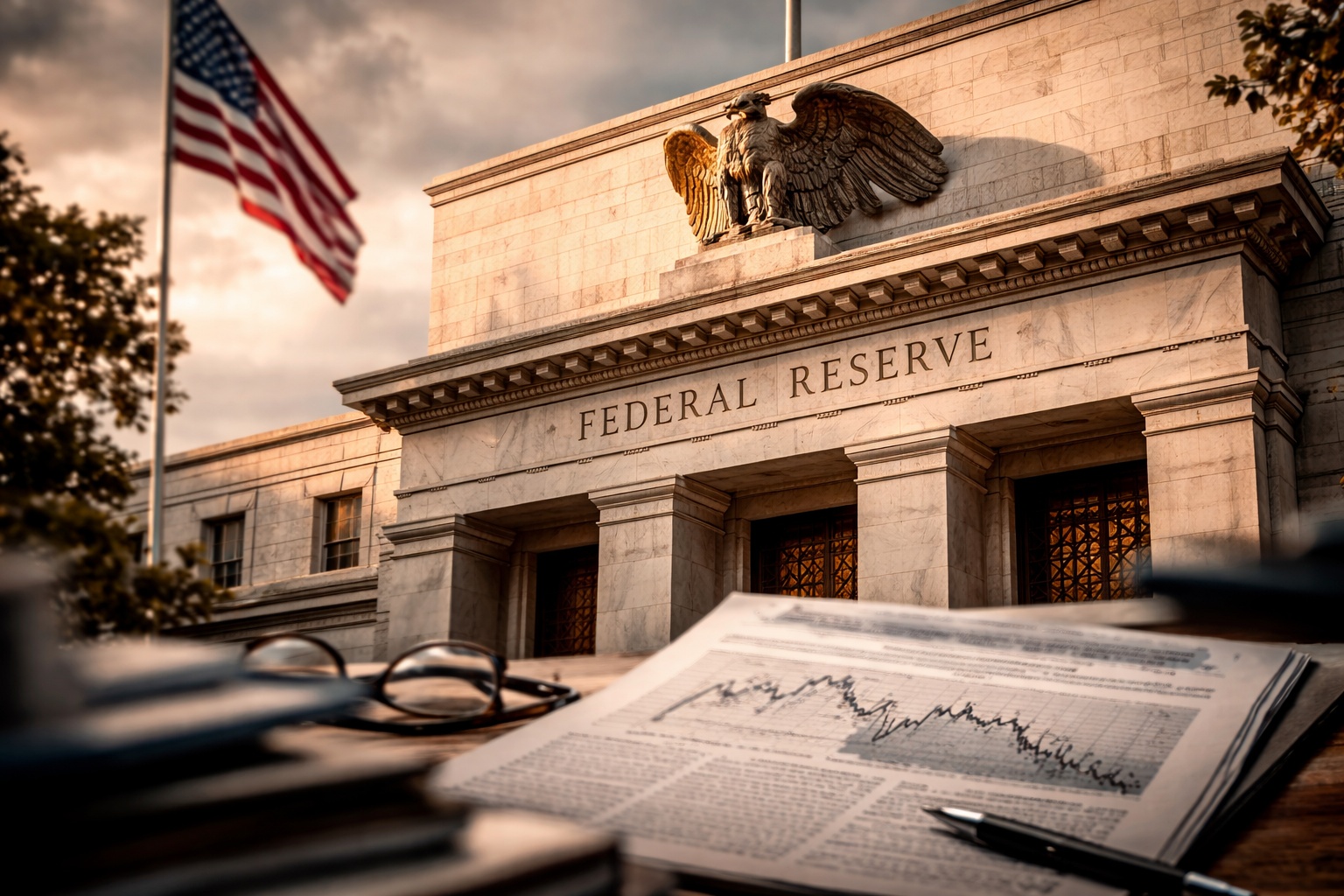
The Federal Reserve lowered its benchmark interest rate in December 2025 for the third time this year, highlighting growing concern among policymakers about economic risks despite inflation remaining above long-term targets.
The decision reduced the federal funds target range by a quarter percentage point, bringing borrowing costs to their lowest level since 2022. In its post-meeting statement, the Federal Open Market Committee cited moderating economic growth, signs of cooling in the labor market, and persistent uncertainty around inflation dynamics.
The December move followed earlier rate cuts in September and October, marking a notable shift from the prolonged tightening cycle that began in 2022. While inflation has eased from its peak, policymakers emphasized that progress toward price stability has been uneven across sectors.
Meeting minutes revealed internal divisions within the committee. Several officials expressed concern that easing policy too quickly could allow inflationary pressures to reemerge, particularly in services and housing. Others argued that delaying further cuts risked weakening employment conditions at a time when layoff announcements were rising.
Recent economic data presented a mixed picture. Consumer spending remained resilient through late 2025, supported by steady wage growth and household savings. At the same time, job openings declined and corporate layoffs increased, suggesting underlying softness beneath headline labor market figures.
Inflation indicators further complicated the outlook. While headline inflation moderated, core measures remained elevated in categories such as housing and healthcare. Fed officials acknowledged that external factors, including energy price volatility and global supply conditions, could influence inflation trends in unpredictable ways.
Financial markets reacted cautiously to the rate cut. Equity markets posted modest gains following the announcement, while Treasury yields edged lower as investors priced in the possibility of additional easing in 2026. However, analysts noted that the Fed’s guidance stopped short of committing to a sustained series of cuts.
Economists describe the December decision as a recalibration rather than a reversal of policy. By easing rates gradually, the central bank aims to support economic activity without undermining progress on inflation control. Officials reiterated that future decisions would remain data-dependent.
Consumer surveys released after the meeting showed households becoming more pessimistic about job prospects and personal finances, reinforcing concerns about economic confidence entering 2026. Those trends may influence policy deliberations in the months ahead.
As the year draws to a close, the Fed faces the challenge of balancing competing risks. With inflation not fully subdued and labor market signals softening, monetary policy decisions in early 2026 are expected to play a critical role in shaping economic expectations.