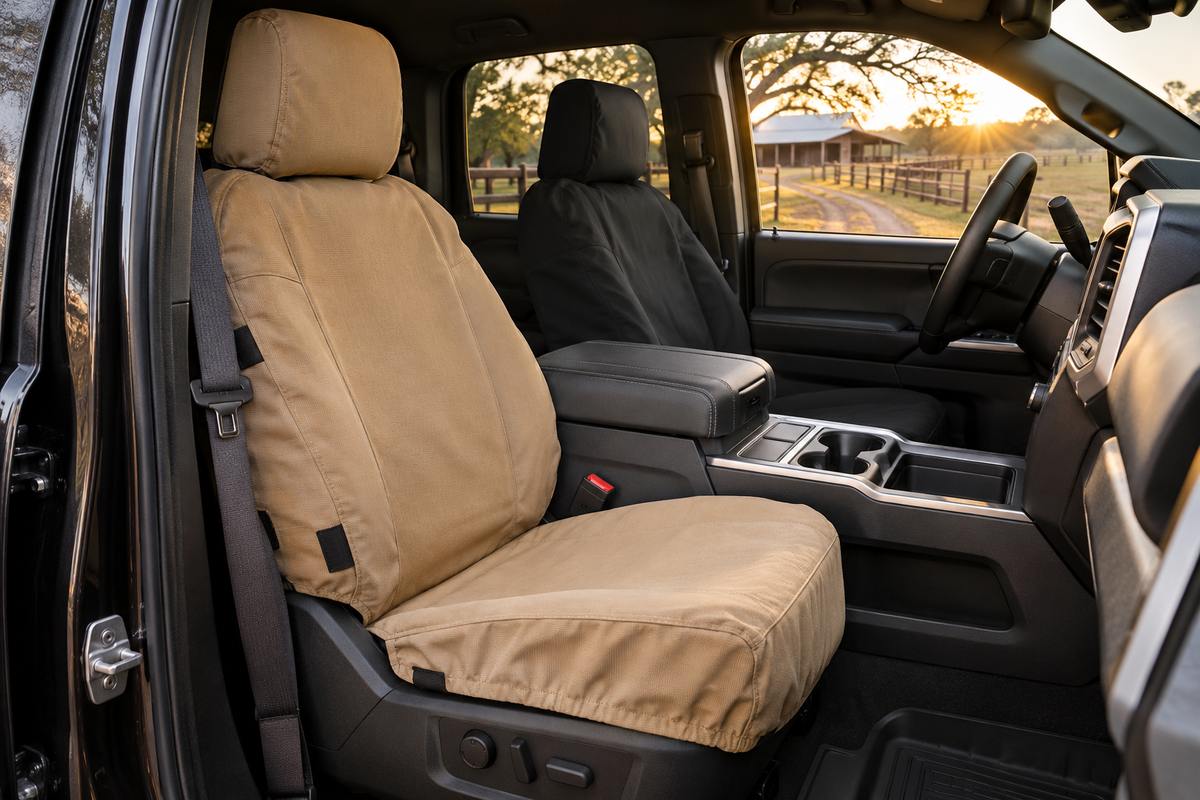
Pickup trucks are built for versatility. Whether used for daily commuting, hauling equipment, towing trailers, or weekend adventures, they often encounter conditions that put considerable stress on their interiors. Mud, dust, spilled beverages, work clothing, and outdoor gear can gradually damage factory upholstery.
Choosing the right seat covers can help preserve your truck's interior while improving comfort and simplifying maintenance. With numerous materials, designs, and fit options available, understanding what works best for your vehicle is essential.
Before purchasing pickup truck seat covers, consider your driving habits and the environments your truck regularly encounters.
A pickup used primarily for commuting may require different protection than one used for construction, farming, or off-road activities.
| Truck Usage | Recommended Seat Cover Features |
| Daily commuting | Comfort, breathability, and stain resistance |
| Construction work | Abrasion resistance and reinforced stitching |
| Farming and agriculture | Moisture protection and easy cleaning |
| Off-road adventures | Rugged materials and secure fit |
| Family transportation | Spill resistance and comfortable fabrics |
| Hunting and fishing | Waterproof materials and dirt resistance |
| Pet transportation | Scratch resistance and easy pet hair removal |
Identifying your primary needs can help you avoid investing in features that offer little practical benefit.
The material determines how well a seat cover performs under different driving conditions. Some fabrics emphasize durability, while others prioritize comfort, moisture resistance, or appearance.
Cordura is a rugged fabric known for its abrasion resistance. It is particularly suitable for work trucks that experience frequent contact with tools, equipment, and heavy clothing.
Neoprene offers flexibility, comfort, and moisture resistance. It is a practical option for drivers who regularly participate in outdoor activities or want a balance between comfort and protection.
Canvas provides a durable protective surface suitable for demanding environments. Treated canvas options may offer additional resistance to moisture and stains.
Leatherette creates a refined interior appearance while providing a smooth surface that is relatively easy to clean. It is suitable for truck owners who prioritize style and everyday practicality.
Polyester blends offer versatility, moderate durability, and a range of design options. They can be suitable for daily driving and family use.
Pickup trucks come in various cab styles and seating arrangements. Even trucks from the same manufacturer may feature different seat configurations depending on the model, year, and trim level.
Before ordering seat covers, identify your vehicle's:
Providing accurate vehicle information helps ensure the selected covers offer appropriate coverage and a secure fit.
Truck owners typically have two main options when selecting seat covers: custom-fit and universal designs.
Custom-fit covers are manufactured around specific vehicle seat dimensions. They generally provide more consistent coverage, reduced movement, and a cleaner interior appearance.
Universal covers are designed to accommodate multiple compatible vehicles. They may be more affordable and easier to purchase but can have limitations in fit and coverage.
For truck owners seeking long-term upholstery protection, custom-fit options may provide better overall value.
Pickup trucks frequently encounter moisture from rain, snow, wet clothing, spilled drinks, and outdoor equipment.
Water-resistant or waterproof seat covers can help prevent liquids from reaching factory upholstery. This is particularly beneficial for trucks used in landscaping, construction, farming, fishing, and camping.
When comparing moisture protection, consider the following:
Remember that waterproof fabric does not necessarily mean the entire seat cover is waterproof, as liquids may still penetrate through seams or openings.
Truck seats experience considerable friction as drivers and passengers repeatedly enter and exit the vehicle. Seat edges and side bolsters are particularly susceptible to wear.
High-quality seat cover construction should include:
These features are especially important for trucks used in physically demanding occupations or frequent outdoor activities.
Truck owners who spend long hours behind the wheel should not overlook comfort when selecting seat covers.
Some rugged materials provide excellent protection but may feel stiff or retain heat. Softer fabrics can offer a more comfortable seating experience, although their resistance to heavy wear may vary.
Consider your local climate, commute duration, and personal preferences when evaluating:
The ideal seat cover should withstand your truck's daily demands without making extended drives uncomfortable.
Modern pickup trucks often include advanced seating systems and integrated controls. Installing incompatible seat covers may interfere with certain vehicle functions.
Check compatibility with:
Always consult your vehicle manufacturer's recommendations and the seat cover provider's specifications before installation.
Seat covers offer an opportunity to personalize your pickup truck without replacing its original upholstery.
Truck owners can choose from a variety of colors, textures, and finishes, including:
A well-chosen style can complement the truck's existing interior while maintaining a practical appearance suitable for work or everyday use.
A truck used for demanding activities may require more frequent interior cleaning than a typical passenger vehicle.
Selecting seat cover materials with manageable maintenance requirements can reduce the time spent removing dirt, stains, and debris.
Depending on the material, routine care may include vacuuming, wiping down surfaces, spot-cleaning stains, or removing covers for washing.
Always follow the manufacturer's cleaning instructions, particularly for fabrics with waterproof coatings or specialized protective treatments.
Avoiding common purchasing mistakes can help truck owners select products that deliver better performance and long-term value.
These mistakes include:
Taking the time to compare these factors can help prevent unnecessary replacements and upholstery damage.
Quality seat covers can help protect factory upholstery from stains, scratches, friction, and everyday deterioration. They may also reduce the need for professional cleaning and premature upholstery repairs.
For truck owners who plan to keep their vehicles for several years, durable and properly fitted seat covers can offer practical long-term value. Preserving the original upholstery may also contribute to a more presentable interior when selling or trading in the vehicle.
Choosing the right seat covers for your pickup truck involves more than finding an attractive design. Material durability, proper fit, moisture resistance, comfort, and ease of maintenance all influence their effectiveness.
Whether your pickup serves as a work vehicle, family transporter, daily commuter, or outdoor adventure companion, selecting seat covers suited to your lifestyle can help maintain a cleaner, more comfortable, and well-protected truck interior for years to come.