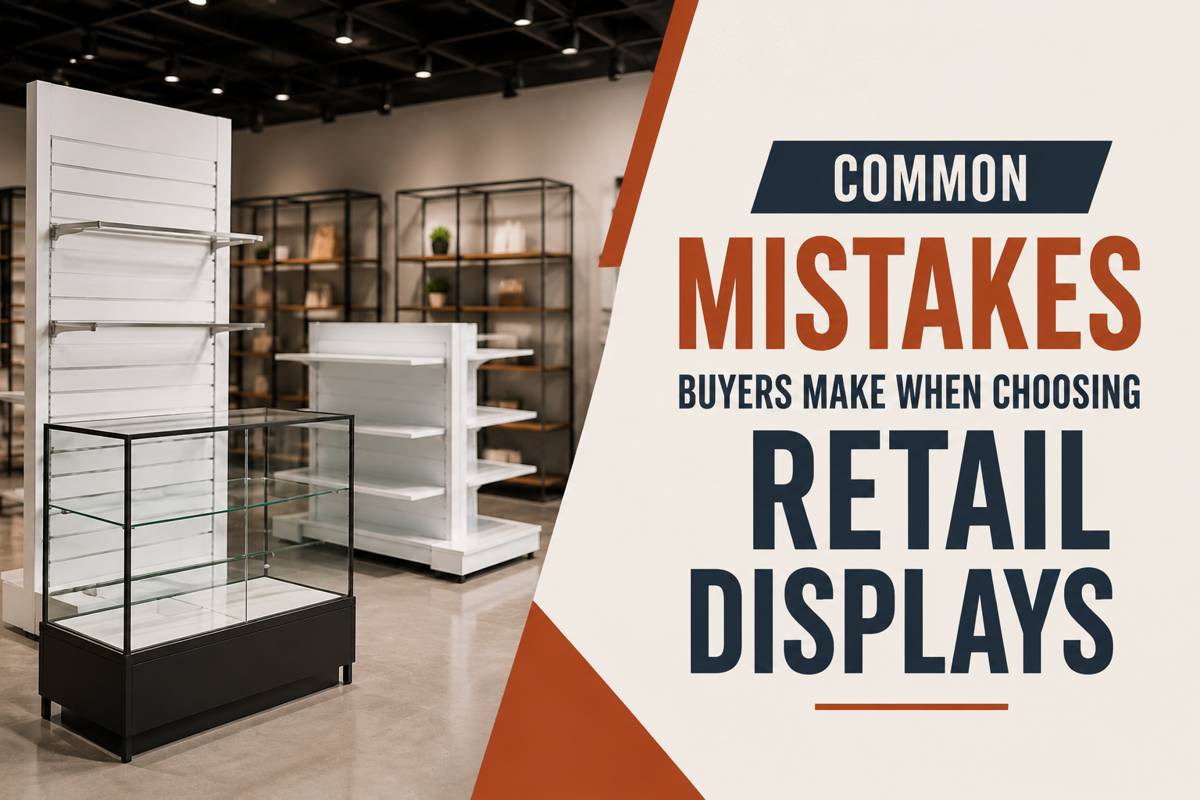
That cost is real. In its 2026 In-Store Retail Display Influence Report, Frank Mayer surveyed more than 1,100 U.S. shoppers and found that 76% had discovered a new product or brand from a retail display, and 63% said displays shaped which of two similar products they chose. This guide walks through the mistakes we see buyers make most often, and how to avoid each one before you place an order.
Key takeaways
The biggest mistake buyers make when choosing retail displays is judging a fixture by its purchase price instead of its total cost of ownership. A cheap display that warps, fades, or breaks and needs replacing every few months almost always costs more over a year than a sturdier unit that lasts.
Total cost of ownership includes shipping, assembly, replacement, and the sales you lose while a broken fixture sits empty or looks shabby. A low upfront price can hide all of that. In practice, buyers who track cost per year rather than cost per unit tend to make better calls, because a display that survives three years of daily handling quietly beats one that has to be reordered three times.
Price still matters. The point is to weigh it against lifespan, warranty, and how much handling the display will take. Ask a supplier how the fixture holds up after a year in a high-traffic aisle, not just what it costs to buy today.
Match a retail display to the product by starting with the product, not the fixture. Measure the item, count how many facings you need, and check the weight the shelf must hold. A display that cannot carry your merchandise or show it at the right height will underperform, no matter how it looks.
A frequent mistake is choosing aesthetics over function. An impressive fixture that cannot support your product weight or SKU density fails at its one job. A rack built for lightweight apparel will sag under heavy denim, and a shelf sized for boxed goods will swallow small accessories. The display should present the product clearly, at eye level, where it counts, with room for the customer to pick it up.
Sightlines matter as much as capacity. Shoppers decide fast, so the hero product needs a clean, unobstructed view. Overloading a single fixture with too many items buries the thing you most want to sell. Choose a display sized for the specific product and the number of units you actually want on the floor.
Choosing the right retail display material is where many buyers go wrong, because they pick by habit or price rather than by environment. The main options are acrylic, glass, wood, metal, and corrugated cardboard, and each fits a different mix of traffic, budget, and expected lifespan.
For most modern retail floors, acrylic has become the default for counter units, cases, sign holders, and product risers. It offers the clarity of glass without the weight or the shatter risk, which matters in busy, high-touch spaces. Acrylic is far more impact-resistant than glass, weighs roughly half as much, and can be molded into custom shapes that glass and metal cannot match. Its main trade-offs are that it scratches more easily than glass and, without a UV-stable grade, can yellow over the years in direct sunlight.
| Material | Best for | Strengths | Watch-outs |
| Acrylic | High-traffic counters, cases, sign holders, and custom shapes | Clear, lightweight, shatter-resistant, moldable | Scratches more easily than glass; needs UV-stable grade in sunlight |
| Glass | Premium, permanent showcases | Scratch-resistant, upscale feel, does not yellow | Heavy, fragile, higher shipping and injury risk |
| Wood | Warm, brand-forward fixtures | Premium look, sturdy, customizable | Heavier, can warp with moisture, and longer lead times |
| Metal | Heavy-duty shelving and gridwall | Strong, durable, high load capacity | Utilitarian look, can rust, less product clarity |
| Corrugated | Temporary and seasonal POP displays | Cheap, light, recyclable, fast to produce | Short lifespan, bends and wears quickly |
Choose acrylic if you want clarity and safety in a high-traffic area, need custom shapes, or plan to ship and reconfigure displays often. Choose glass when you want a premium, permanent showcase, and scratch resistance matters more than weight. Choose corrugated when the display is temporary or seasonal, and low cost is the priority.
For units that will live on the floor for years and carry your brand, a purpose-built acrylic fixture usually wins on the balance of clarity, safety, and lifespan. If you go that route, working with a custom acrylic display manufacturer that can fabricate to your exact product size and finish avoids the fit problems that come with off-the-shelf racks.
You can tell a well-made retail display by its material thickness, its joints, its edges, and its rated load. These details separate a fixture that stays sharp for years from one that cracks, wobbles, or looks tired within months. Price rarely tells you this on its own.
What buyers tell us they miss most is thickness and joinery. Thin acrylic flexes and stress-cracks at the corners, while quality units use thicker material and clean, well-bonded seams rather than glued-on tabs that pop loose. On glass and wood, look for finished, even edges and hardware that sits flush. A display that arrives with rough edges or visible seam gaps is signaling how it will hold up.
Load rating is the other overlooked spec. A shelf that looks fine empty can bow under a full facing of product. Ask for the weight each shelf holds, and check that the base is stable enough not to tip when a customer leans in. In practice, the displays that last are the ones where the construction was specified up front, not assumed.
The retail display mistakes that hurt layout most are overcrowding, blocking the natural path through the store, and placing a display where shoppers are not ready to engage. A fixture can be perfect and still fail if it sits in the wrong spot.
Overcrowding is the classic error. Cramming too many products or too many fixtures into a space overwhelms shoppers and buries the hero product, and narrow, cluttered aisles discourage browsing. Give each display room to breathe so the customer's eye has somewhere to land.
Placement near the entrance is its own trap. Retail anthropologist Paco Underhill, author of Why We Buy, described the "decompression zone," the first five to fifteen feet inside a store where shoppers are adjusting and tend to ignore whatever is placed there. A high-value display in that zone often gets walked past. Position feature displays past the entry, along the main path, and at natural stopping points rather than in dead zones or in the way of the flow to the registers.
Multi-location buyers get brand consistency wrong in two ways: using the exact same display in every channel, and treating fixtures as generic holders instead of brand assets. Both cost recognition and sales at scale.
Using one display design across every environment is a common misstep, because what works in a spacious specialty store does not fit a cramped convenience layout. The footprint, the height, and even the material may need to change by channel while the brand look stays consistent. A display should fit the store it lives in, not just the catalog it came from.
The second mistake is leaving the displays generic and unbranded. A fixture is an extension of your brand, and one without cohesive color, logo placement, or messaging misses a recognition opportunity that a competitor's display will take. For rollouts across many locations, plan for reordering and replacement parts too. Buyers who pick a display with no clear reorder path end up with mismatched fixtures across stores within a year, which reads as inconsistency to shoppers.
The logistics and supplier mistakes buyers overlook usually surface after the order is placed: long lead times, minimum order quantities, hidden costs, and skipping a sample before a full run. Each one can blow a launch date or a budget.
Hidden costs are the most common surprise. Many buyers focus on the unit price and forget freight, assembly, packaging, and, for imported fixtures, customs and duties. Ask for a quote that spells out design, production, shipping, and installation so the real number is clear before you commit.
Skipping a physical sample is the mistake that hurts most on custom orders. Approving a full production run from a rendering alone is how fit, color, and finish problems reach every store at once. Order a prototype, put your product on it, and confirm it works before scaling. It is also worth vetting the supplier itself: ask about custom fabrication capability, material specs, lead times, and references from similar projects. A supplier who communicates clearly up front tends to deliver fewer surprises later.
Comparing retail display options gets easier when you judge every candidate against the same three questions: does it fit the way you sell, how does it compare on the specs that matter, and what should you expect once it is on the floor. Use a consistent frame, and the right choice usually stands out.
When it makes sense: Invest in durable, custom, or premium displays when the fixture will live on the floor for years, carry your brand, or hold higher-value products. Choose lower-cost or temporary displays when the need is seasonal, promotional, or short-run.
How to compare your options: Line up candidates on material fit for the environment, load capacity for your product, build quality, lifespan, lead time, reorder path, and total cost over the display life, not just sticker price. Score each on the same criteria rather than reacting to photos.
What results to expect: A well-matched display should present the product clearly, survive daily handling, and hold its look for its intended lifespan. It should make the buying decision easier for the shopper, not harder.
| If you are... | A good starting point | Why it fits |
| A single boutique on a tight budget | Acrylic counter units and sign holders | Clear, safe, affordable, easy to reconfigure |
| A brand rolling out to many stores | Custom-fabricated acrylic or wood fixtures | Consistent brand look, sized per channel, built to reorder |
| A high-value or regulated category | Locking glass or acrylic display cases | Security plus visibility for premium items |
| A seasonal or promotional push | Corrugated POP displays | Low cost, fast production, recyclable after the run |
A simple process keeps you from repeating the common mistakes buyers make when choosing retail displays. Work through these steps in order before you place an order:
The most common mistake is choosing based on purchase price alone and ignoring the total cost of ownership. A cheap display that warps or breaks and needs frequent replacement usually costs more over a year than a sturdier unit. Weigh price against lifespan, warranty, and how much handling the display will take.
Acrylic is usually better for high-traffic, high-touch areas because it is lighter and far more shatter-resistant than glass. Glass suits premium, permanent showcases where scratch resistance and an upscale feel matter more than weight. The right choice depends on traffic, budget, and how often the display moves.
Check material thickness, joint construction, edge finish, and the rated load per shelf. Thicker material and clean, well-bonded seams last longer than thin panels and glued tabs. Rough edges or a wobbly base are early signs that the display will not hold up.
Stock displays work when your product fits standard sizes, and the need is short-term or low-budget. Custom displays make sense when the fixture must fit a specific product, carry your brand across locations, or last for years. Ordering a sample before a full custom run prevents fit and finish problems.
Fewer than most buyers think. Overcrowding a display buries the hero product and overwhelms shoppers, which lowers engagement. Show a focused selection with room around each item, and use separate fixtures for different product types.
Most of the common mistakes buyers make when choosing retail displays trace back to one habit: deciding on price and looks before fit, material, and build quality. Start with the product and the environment, weigh cost across the display's full life, and confirm the details with a sample before you scale.
Read more buyer guides like this one to make smarter, lower-risk buying decisions for your store.